Home Preparedness › Power and Communication
If the Power Goes Out Tonight, How Long Can Your Family Reach You?
Most prepared households have the food and the water handled. Far fewer have looked at the one item everything else depends on, which is a phone with charge left in it. Here is the honest arithmetic, and what to do about it before you need it.
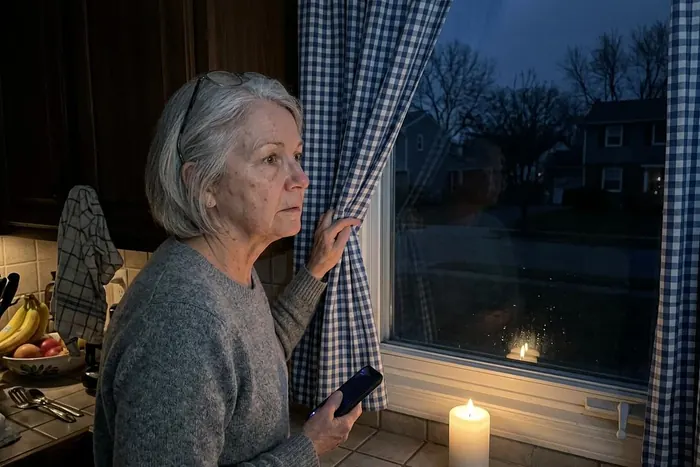
This is not an article about disaster. It is an article about arithmetic.
Over the past few years I have talked to a lot of women in their sixties and seventies who keep a properly stocked house. Canned goods on a basement shelf. Water put by. Batteries, candles, a hand-crank radio, extra blankets. These are practical people who have been through enough winters to take a forecast seriously.
Almost every one of them had the same gap, and almost none of them had noticed it.
They had prepared to be warm, fed and lit. They had not prepared to be reachable.
Four questions worth answering tonight
- If your power went out this evening, how many hours of phone battery do you have in the house, not counting what is in the phone right now?
- Who would try to reach you first, and what would they do if you did not answer by the second day?
- Who are you the check-in for? A sister, a neighbor, a friend who lives alone?
- Is there any way to put charge back into a phone in your house without an electrical outlet?
If the fourth question gave you pause, you are in the majority, and the rest of this page is written for you.
What Actually Goes Out When the Grid Goes Out
When people picture a power cut they picture the lights. The lights are the smallest part of it.
The refrigerator stops. The furnace stops, because even a gas furnace needs electricity to run its blower and its ignition. If you are on a well, the pump stops, so the taps stop. If you have a cordless house phone, it stops, because the base station is plugged into the wall.
What is left is the phone in your pocket.
Cell service does not switch off the moment the power does. Cell sites have battery backup of their own, and the larger ones have generators behind them. But that backup is measured in hours rather than days, and it depends on crews reaching the site and keeping fuel in it. During a widespread event those crews are dealing with the same downed trees and blocked roads as everyone else.
So there is a window. It is usually a generous one. The problem is that most people burn through their own battery long before the network runs out of its backup.
And here is the part that surprises people: a phone drains faster during an outage than it does on a normal day. When signal gets weak, a phone turns up its transmit power and keeps hunting for a tower. That hunting is one of the most power-hungry things a phone does. The same handset that comfortably lasts you a day can be flat by the afternoon.
Your food supply is measured in weeks. Your water is measured in days. Your ability to tell your family you are alright is measured in hours.
The Arithmetic Nobody Does
Do this with your own phone rather than with my numbers. It takes about a minute and it is the most useful minute on this page.
Work it out for your own house
- Start with the number on your screen right now
- Pick up your phone and look. Whatever percentage it shows is your realistic starting point, because outages do not wait politely until you are at 100. Most of us are sitting somewhere near half for most of the day.
- Subtract the things an outage makes you do
- Checking the outage map. Texting your children so they do not worry. Looking at the radar. Using the screen as a flashlight to get down the hallway. None of it is excessive, and all of it comes out of the same battery.
- Then subtract the signal hunting
- If your local site is running on backup and the coverage gets patchy, your phone works harder for every bar it shows you. This is the part people never account for.
- Now ask the only question that matters: what puts charge back?
- The wall is out. The car works, but only while there is gas in the tank and only while you are sitting in it, which is not a plan for the second night. For most households the honest answer is nothing, and that is the gap.
If the answer to the last one is a power bank you bought a few years ago and have not looked at since, it is worth digging out tonight and checking what is actually in it. A lithium cell left in a drawer for three years does not hold what it used to, and a bank you never recharged is a brick with a light on it.
You Are Probably Somebody’s Check-In
Ask a woman in her seventies who would call her first in an emergency and you often get a thoughtful pause. Ask her who she would call and the list comes out immediately.
Her sister in Florida. Her son, so he does not spend the evening worrying. The neighbor two doors down who is eighty-three and lives alone and would never ask anyone for help.
This is the part of the plan that gets missed, because it does not look like preparedness. It looks like Tuesday. But it is exactly why a dead phone is a bigger problem for this reader than for almost anyone else in the house. She is not one person who needs help. She is the point three other people check in through.
An emergency plan that covers only you is not really a plan. The phone matters because somebody else needs to know you are alright, and because two or three other people are relying on you to be the one who calls.
Power You Can Keep Without the Grid
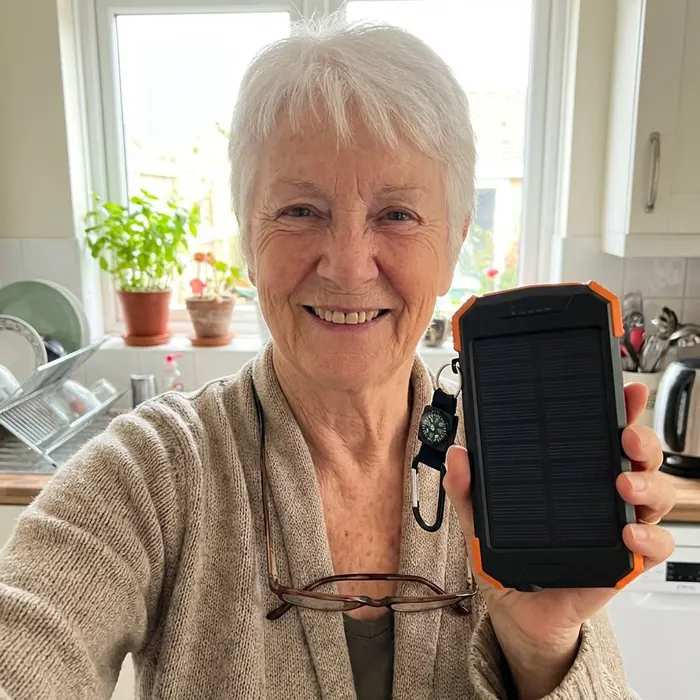
This is where a solar power bank stops being a gadget and starts being a sensible piece of household equipment. I have been looking at the Rivanta Emergency Power Bank because it is built around exactly this problem rather than around camping trips.
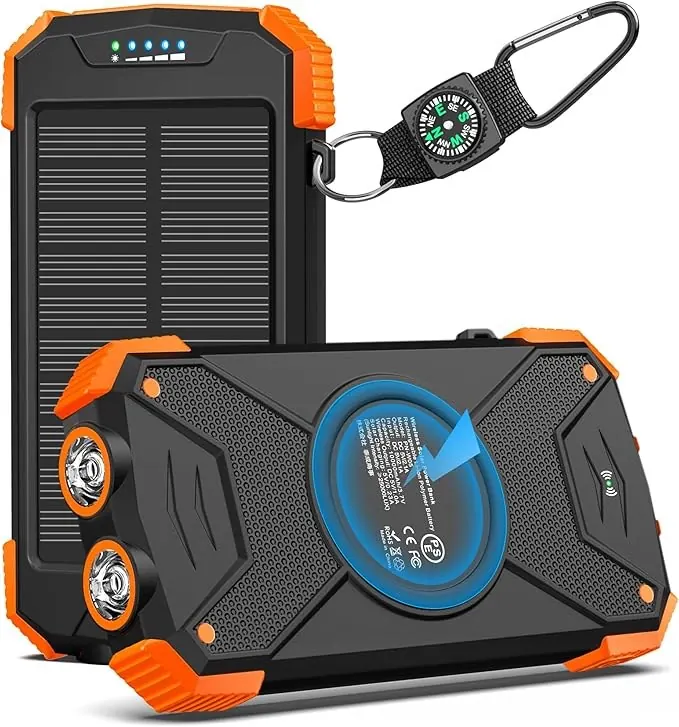
The short version: it holds about two to two and a half full phone charges, it refills four different ways so that a dead outlet is not the end of the story, and it has a flashlight on the end of it so it earns its place in a drawer rather than being one more thing to remember.
The specification that matters most to me is the USB-C port. At 20W it takes a dead iPhone to roughly 65 percent in about half an hour, which is the same speed you get from a wall plug. In an outage that is the difference between charging by candlelight all evening and being back to useful in the time it takes to make dinner.
The line that made me take it seriously. Rivanta’s own product page says the solar panel is your backup, not your main charger. That is an unusual thing for a company to print about its own headline feature, and it happens to be true of every solar panel this size. A panel that fits in your hand tops the unit up over days of daylight. It does not fill it from flat in an afternoon. Fill it from the wall, then let the sun hold the line.
What you actually get
- Two to two and a half full charges for most iPhones and Samsung Galaxy handsets
- 20W USB-C fast charging, about 65 percent on a dead iPhone in 30 minutes
- Three devices at once across USB-C, USB-A and the wireless pad on top
- Four ways to refill it: wall, USB-A, the built-in cable, or the solar panel
- Twin LED flashlight with steady, strobe and SOS modes, plus a compass on the carabiner
- IPX4 splashproof, dustproof and shockproof, in an ABS and polycarbonate shell with rubber edges
- 37Wh, which is under the 100Wh TSA limit, so it is legal in a carry-on bag
$49.99 · 30-day money-back guarantee
The Feature on Your Phone That Only Works If It Still Has Battery
This is worth knowing whether or not you ever buy anything.
Newer iPhones, and a growing number of Android handsets, can send an emergency SOS by satellite when there is no cell service at all. You hold the phone up toward open sky, it walks you through pointing it, and it sends a short message to emergency services. Some models will also send a check-in to a family contact the same way.
It is a genuinely remarkable thing to have in a coat pocket. It is also completely useless at zero percent.
That is the honest relationship between a power bank and everything else in this article. The bank does not connect you to anything. It keeps the thing that does connect you alive long enough to be used. Every feature your phone has, from satellite SOS to a text message to the flashlight, sits behind the same battery.
If you want to know whether your own phone has it, look for Emergency SOS via satellite in the settings, or ask whoever set the phone up for you. It is worth ten minutes to find out before you need it rather than after.
A Five-Minute Routine That Keeps It Useful
A power bank that has been in a drawer since 2023 is not a backup. It is a paperweight. The whole system is four small habits.
Step 1
Fill it from the wall first, on the day it arrives
Do not start with the solar panel. Plug it in, let it fill completely, and now you own two and a half phone charges that exist whether or not the sun cooperates.
Step 2
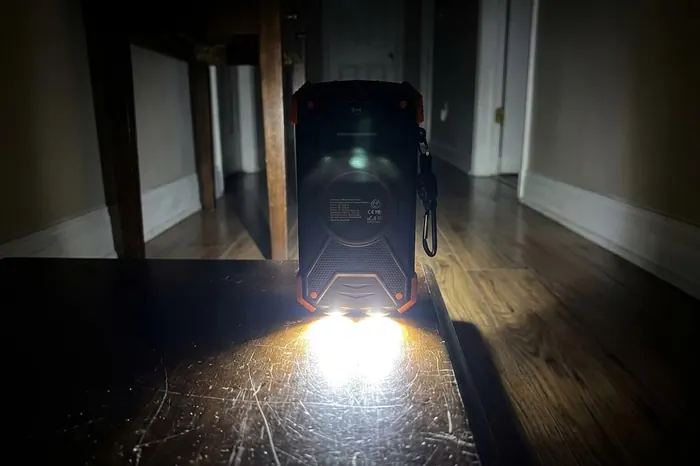
Keep it where you can find it in the dark
Not the back of a closet. A hall drawer, a kitchen drawer, the shelf by the door. Somewhere you could put your hand on it without a light, because the moment you want it is the moment you cannot see.
Step 3
Put it on a windowsill when the clocks change
Twice a year is enough to keep it honest. Leave it in a south-facing window for a few days, then plug it into a phone to confirm it still delivers. Tie it to something you already do and you will not have to remember it.
Step 4
In an actual outage, text rather than call, and use airplane mode
A text is a fraction of the power and it keeps retrying in the background until it gets through, which is often long after a call would have failed. Between messages, airplane mode stops the phone hunting for a tower. Turn it on, send, turn it off. That one habit can double what you have.
What Each Backup Actually Covers
There is nothing wrong with the other options on this list. The point is that most households own one or two of them and assume they are covered.
| Phone alone | Wall charger | Car charger | Rivanta® bank | |
|---|---|---|---|---|
| Works with no grid power | Yes | No | Yes | Yes |
| Refills without an outlet | No | No | Needs gas | Solar |
| Usable from inside the house | Yes | Yes | No | Yes |
| Charges more than one phone | No | One at a time | One at a time | Three at once |
| Gives you light | Drains the phone | No | No | Twin LED, SOS |
| Goes in a bag or a carry-on | Yes | Yes | No | Yes, 37Wh |
Comparison of common household backup options. Rivanta specifications as published by the manufacturer.
What Owners Say
★★★★★
“I bought this for my boat and, sure enough, needed my phone during a serious storm. The marina had no power, but I was still able to contact relatives, if for no other reason than to let them know I was okay. Thanks guys!”
★★★★★
“So nice to have this option when power is out. It charged my husband’s phone in ten minutes and still had power to use.”
★★★★★
“Bought this for a friend who had a power outage and he said it was a lifesaver.”
★★★★★
“This power bank is really good, have no issues with it, the light is also a plus.”
Reviews reproduced from the manufacturer’s published customer reviews. Individual experiences vary.
Why Most People Order More Than One
I did not expect this to be the pattern, but it is the most common thing I hear. Somebody buys one, keeps it for a month, and then buys two or three more.
They do not go into a bunker. They go to a daughter who lives alone, a neighbor who would never buy one herself, a son who travels for work. People who would not have thought of it, and who now have one in a hall closet because somebody put it in their hands and said keep this.
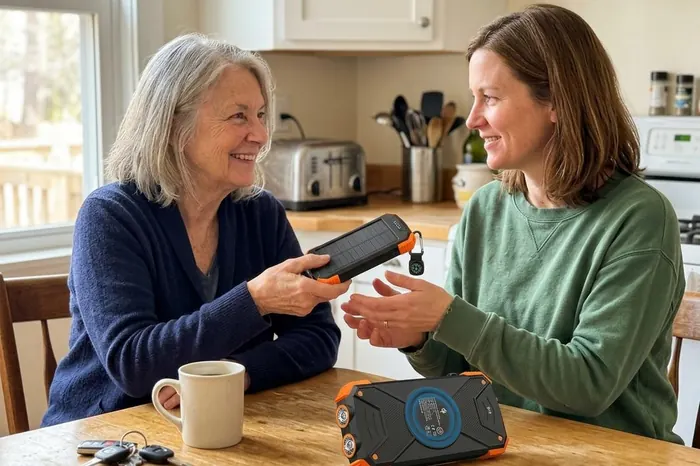
It follows from the check-in point earlier. If the reason your phone matters is that other people need to reach you, then their phones need to work too. A plan where only one household in the chain has power is half a plan.
Rivanta prices the multi-packs around that behavior rather than as a way to inflate an order, which is the sensible way to do it.
Rivanta® Emergency Power Bank
Single unit. Under fifty dollars.
- Buy 2, get 1 free Three units. For you and one other household. $99.99
- Buy 3, get 2 free Five units. For the family. $149.99
Every order is covered by the Rivanta promise: if it does not deliver reliable backup power when you need it, they refund the order within 30 days of delivery.
Get the Rivanta® Power BankPricing and availability shown on the official Rivanta store
Questions Worth Asking Before You Buy
Does the solar panel genuinely work, or is it decoration?
It works, with a realistic expectation attached. Rivanta themselves describe the panel as your backup rather than your main charger. Left in daylight it keeps topping the unit up so you are never starting from empty, and in a long outage that is the difference between a battery that recovers and one that does not. It is not a fast way to fill it from flat. Use the wall for that.
How many phone charges does it actually hold?
About two to two and a half full charges for most iPhones and Samsung Galaxy handsets. Used sensibly, with airplane mode between messages, that covers a long weekend without ever seeing a low battery warning. Split across two phones it is proportionally less, which is the practical argument for a second unit rather than a shared one.
How fast does it charge a dead phone?
The USB-C port delivers 20W, which takes an iPhone from dead to roughly 65 percent in about 30 minutes. That is wall-plug speed. The USB-A port and the wireless pad on top are slower, and you can run all three at once if more than one person needs charge.
Is it complicated to use?
No. There is a button and a cable attached to the unit, so there is nothing to hunt for. Press the button to see the charge level, plug the phone in, and press the button twice for the flashlight. If you can use a television remote you can use this.
What if it gets rained on or dropped?
It is rated IPX4, which covers rain, splashes and spills, and it is also dustproof and shockproof. The shell is hard ABS and polycarbonate with reinforced rubber edges. It is built to live in a bag or a car rather than in a display case, though it is not a diving accessory and should not be submerged.
Can I take it on a plane, or send one to family?
You can fly with it. The TSA limit for a lithium battery in a carry-on is 100 watt-hours and this unit is 37Wh, comfortably inside the rules. It goes in your carry-on rather than a checked bag, which is true of every power bank. Shipping one to a relative is handled at checkout like any other order.
What if I decide it is not for me?
Rivanta’s stated promise is a refund within 30 days of delivery if the unit does not deliver reliable backup power when you need it. Check the current terms on the product page before ordering, since published guarantee periods can change.
Practical Preparedness Is Mostly About Removing Excuses
I am not going to tell you the grid is about to fail, because I do not know that and neither does anyone selling you anything. What I do know is that outages happen every year in every part of this country, that the storms which cause them are not getting shorter, and that the response to one is not fear. It is a short list of small, boring items.
You have most of that list already. The food is handled. The water is handled. The blankets and the batteries and the radio are handled.
Food keeps you going. A charged phone is how the people who love you find out that you are.
The gap is the one item that gives out in hours rather than weeks, and it costs less than fifty dollars to close. If you have already done the harder parts of preparing, this is the obvious next one. And if you have not started at all, it is not a bad place to begin, because it is the piece of the kit that does half a dozen jobs at once.
$49.99 · 30-day money-back guarantee · Multi-packs available