A Retired Extension Agent Told Me Which Call Comes In Every Bad Year. It Is Never From People Who Were Short of Food.
Thirty-one years of county garden calls taught Wendell Pike that the households who get caught out are not the ones with a thin pantry. They are the ones who start in the wrong month. Here are the five things he told me over coffee, and the one he keeps sealed on his own shelf.

I am 68, and I have spent eleven years writing about how ordinary households get ready for the weeks when things stop working normally. I could recite the list in my sleep. Water. Canned food. Batteries. A radio that runs without the grid.
Not once in eleven years did I write down a single seed.
Then in March I spent an hour across a diner table from a man named Wendell Pike, who answered the public's growing questions for a county extension office in Nebraska for thirty-one years, and he took that list apart politely and completely.
What follows is the five things he told me, in the order he said them. The fifth is the reason there are three of these in my family now instead of one.
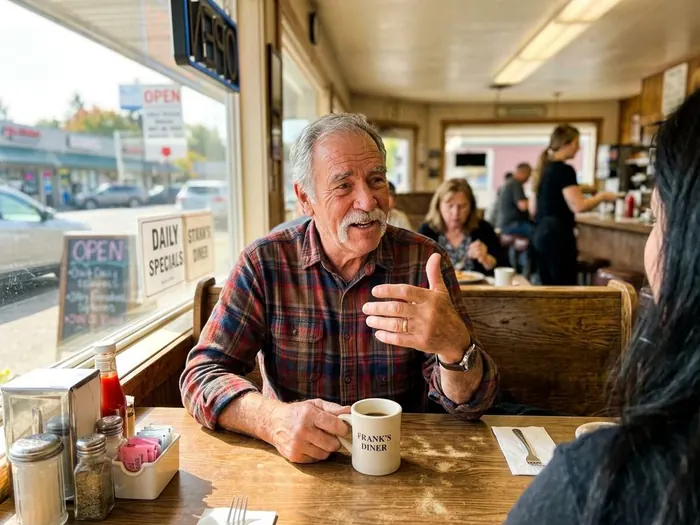
The calls that come in a bad year are not from people who ran out of food. They are from people who started in the wrong month.
I asked him what a bad year actually sounds like from inside an extension office. I was expecting pests, drought, questions about a crop that had already failed.
"You get those all year," he said. "Those are the ordinary calls. The ones I remember came in a cluster, and every one of them sounded the same."
Somebody had watched the news, got a bad feeling, driven out and bought seeds. Then they rang the office to ask how soon there would be something to eat.
"And I was the one who had to tell them," he said. "Lettuce in about six weeks if you are lucky. First ripe tomato, two and a half months. Squash the same. They had the seeds in their hand and they were still a whole season away from dinner."
He was not unkind about it. He said the instinct was exactly right and the timing was the only thing wrong with it.
Every other thing on a pantry shelf works the day you open it. A can of beans is a meal at eleven o'clock at night in January. Seed is the one item in the whole kit with a calendar attached to it, and that makes it the one item that has to be bought before you need it rather than during.
Seed does not die of old age. It dies of humidity, which is a problem you can actually solve.
This was the part I did not know, and I have since put it to two people who grow for a living.
A seed is not inert. It is alive and asleep, running on a small fixed store of energy. Warmth and damp air are what wake that metabolism up, and everything it burns sitting in a drawer is energy that is not there later to push a shoot up through soil.
Which is why the same variety can come up beautifully after four years in a cool sealed bag and barely at all after one humid summer on a garage shelf. The clock that matters is not the date printed on the packet. It is the air the seed has been sitting in.
"People blame the seed," Wendell said. "Nine times out of ten they kept it in a garage through July, and the seed did exactly what you would do in a garage in July."
So the packaging is not a detail bolted onto the purchase. For anything you are buying to sit untouched for years, the seal is most of what you are paying for.
Judge a long-term seed kit by how it is packed before you judge it by how many seeds are in it. Sealed against moisture and light, kept somewhere cool, dark and dry, and the same seeds are still worth planting years from now. Loose paper packets in a warm garage are a much shorter promise than they look.
The food backup most homes already own is a shelf that only ever gets smaller.
I told him what is in my own basement. Canned goods, a sack of rice, a chest freezer I am quietly proud of.
He said that is more than most people have. Then he asked me how long it would last.
That is the flaw, and it is not one you can buy your way out of by stacking the shelf higher. A pantry is a finite pile that starts shrinking the moment you begin eating it. Every meal takes the total down and nothing ever puts anything back.
He went through the alternatives the same way, and every one of them has a hole in it:
- Canned and dry goods. They work from the first day, which is exactly why they are the right first purchase. But the pile only travels in one direction.
- The freezer. Excellent right up until the power is the thing that failed, at which point it stops being a store and becomes a deadline.
- A garden you already run. The best of the three by some distance, and it still stops at the end of the season unless you can save seed from what you grew and put it back in the ground next spring.
What he was after, and what took him years to settle on, was the opposite of a pile. Something that makes more of itself.
He asks four questions about any seed kit. Most of what is sold fails at least two.
This is the part I found genuinely useful, because it is a test you can run on anything, including the packet rack at a garden center.
| Wendell's question | Why he asks it |
|---|---|
| 1. Can you save seed from it and plant that next year? | Only open-pollinated heirloom varieties breed true. Hybrid seed gives you one crop and then a lottery. |
| 2. Is it sealed against moisture and light? | Anything meant to sit for years is a storage product first and a seed product second. |
| 3. Is there enough variety to make a meal out of? | Forty pounds of one crop is not a food supply. It is a great deal of squash. |
| 4. Can you grow it where you actually live? | A kit that quietly assumes an acre is no use to somebody with a patio and four hours of afternoon sun. |
These are one retired extension agent's personal criteria, not an official standard. I have found them a better filter than the front of any package.
One vault feeds one household. Most of us are responsible for more than one.
At the end he said the thing I have thought about most since.
"The people who are going to need this are not the ones reading about it," he said. "Ask yourself who you would drive food to. Then ask whether they have anything of their own."
For me that came to three. Myself. My daughter, who rents a place with a balcony and no yard. And my neighbor Ruth, who is 83 and gardened for fifty years before her knees stopped letting her.
A kit on your own shelf covers one house. If the person you would be driving groceries to has nothing, you have not solved the problem, you have moved it into your car. This is why these get bought in twos and threes, and it is arithmetic rather than sentiment.
So what passed his four questions?
I asked him what he keeps. He told me, and then I went and put it through his own four questions myself, which seemed like the only honest way to write about it.
It is the Rivanta® Survival Seed Vault. It is a sealed stand-up pouch about the size of a bag of flour, holding over 16,000 heirloom seeds across 35 garden varieties.
| The question | How it answers |
|---|---|
| Can you save seed from it? | Yes. Every variety in the kit is open-pollinated heirloom rather than hybrid, so seed saved from this year's plants grows true next year. Rivanta's own framing for it is plant once, harvest for years. |
| Sealed against moisture and light? | Yes. The pouch is sealed for long-term storage specifically against moisture and light, which is the thing that actually ends a seed's life. Kept cool and dry, the contents stay viable for years. |
| Enough variety for a meal? | Yes. 35 varieties and over 16,000 seeds. Leafy greens, tomatoes, peppers, onions and cucumbers, root crops from carrots to parsnips, beans and peas, corn, squash and melons, then broccoli, cabbage, cauliflower, basil and okra. |
| Grows where you live? | Yes. Backyard, raised bed, patio container, or a balcony with decent sun. Basic potting soil, water and light, no specialist tools and no acreage. |
Contents and specifications as published by the manufacturer at the time of writing. Confirm current details on the product page before ordering.
One thing the company says that made me trust the rest
Rivanta's own product page says that the more effort you put in, the better your results, and that what they are selling is not a survival fantasy but seed you have to actually plant and tend.
That is the correct way to put it, and I will say honestly that a company telling me plainly that its product needs work from me bought more credibility than any claim on the front of the bag.
$59.99 · 30-day money-back guarantee · multi-packs available
How it compares with the other ways to hold food
| Rivanta® | Canned and dry goods | Freezer stock | Garden center packets | |
|---|---|---|---|---|
| Usable with no grid power | Yes | Yes | No | Yes |
| Makes more of itself | Yes, seed can be saved | No | No | Only if open-pollinated |
| Survives years in storage | Yes, sealed | Yes, watch the dates | No | Varies, often loose paper |
| Variety in one purchase | 35 varieties | Whatever you stocked | Whatever you froze | A few packets at a time |
| Needs land | No, containers work | No | No | No |
| Typical cost | $59.99 | Builds up over time | Builds up over time | $2 to $4 a packet |
Comparison of category characteristics, not of specific competing products. Prices are typical US retail at the time of writing.
The way to buy it, which is to test it
Wendell's advice on this was blunt and I am passing it along as he gave it.
Plant a few the week it arrives, not the year you need them
- Open it and read the variety list before you do anything else. That list is what you would actually be eating, and it is worth knowing now whether it matches the way your household cooks.
- Pick the three fastest things in the bag. Radish, lettuce and bush beans are the usual answer. You are testing germination here, not starting a farm.
- Put a dozen seeds of each in pots on a windowsill in ordinary potting soil. Radish and lettuce will give you an answer inside a week.
- Count what comes up. That number is the only honest measure of what you have bought, and it is the same test all four of the owners quoted below describe running on their own kits.
- Press the air out, reseal the pouch, and put it somewhere cool, dark and dry. A pantry, a drawer, a storage bin. Not the garage and not the attic.
- Write the date you opened it on the bag, put it where you would find it, and then leave it alone.
And if nothing comes up, that is what the guarantee is for. Rivanta's published promise is a refund within 30 days of delivery if the kit does not produce healthy sprouts when planted according to the growing instructions included with it. Check the current terms on the product page before you order, since published guarantee periods can change.
What owners say
I went looking for the flat, unexcited reviews rather than the delighted ones. These are reproduced from the manufacturer's published customer reviews.
"I've lived long enough to know you can't always depend on the system to take care of you. I wasn't sure how hard this would be to use, but I started a few of the seeds and they came up quicker than I expected. Just having something set aside that could help me grow my own food if things ever got tight gives me a real sense of peace."
"Groceries just keep getting more expensive and it honestly started stressing me out. I didn't buy this thinking I'd become a full gardener, I just wanted something as a backup. I tried a few seeds and they grew way easier than I expected. Now I feel like I actually have some control if things keep getting worse."
"I've tried plenty of seeds over the years and a lot of them don't do much. These actually surprised me. I planted a handful just to test them and almost everything sprouted. Didn't do anything fancy either. That told me everything I needed to know, and this is something I can rely on if I ever need to."
"I'm not a hardcore prepper or anything, but I like having options. I planted some of these just to see what would happen and almost everything came up, even without doing much. That's when it clicked for me. This is one of those things you'd rather have before you actually need it."
Reviews reproduced from the manufacturer's published customer reviews. Individual experiences vary.
Why I ended up with three

I bought one. Six weeks later I had bought two more, for the two households in Wendell's question.
Neither my daughter nor Ruth was ever going to buy one for herself, and I do not hold that against either of them. It is the kind of purchase that never quite reaches the top of the list until somebody puts it in your hands and says keep this at the back of the pantry.
Rivanta prices the multi-packs around that behavior rather than as a way to pad an order, which is the only reason it is worth mentioning here.
Rivanta® Survival Seed Vault
Pricing and availability shown on the official Rivanta store · 30-day money-back guarantee
Questions I had before I bought one
What is actually in the kit?
Over 16,000 heirloom seeds across 35 garden varieties, sealed and organized for long-term storage. The mix runs from leafy greens and tomatoes through peppers, onions and cucumbers, root crops, beans and peas, corn, squash and melons, and on to staples like broccoli, cabbage and basil. You can plant from it now and keep the rest sealed.
Are they really non-GMO and heirloom?
Yes. Every variety in the kit is non-GMO, heirloom and open-pollinated, which means untreated seed that breeds true. That last part is the one that matters for a backup: seed saved from this year's plants can go back in the ground next year instead of being bought again.
Do I need special soil, tools or any experience?
No. Basic potting soil, water and sunlight are enough to start. Rivanta is straightforward that the more effort you put in the better your results, but there is no equipment barrier here, and plenty of buyers had never planted anything before this.
How long will they keep in a closet?
Years, stored properly. The pouch is sealed against moisture and light, and moisture is what actually ends a seed's life. Keep it somewhere cool, dark and dry, a pantry or a drawer or a storage bin, and it stays viable long enough to work as a genuine backup rather than a purchase with a short clock on it.
What if I do not have a yard?
You do not need one. These grow in containers, buckets, raised beds and small plots, and a balcony with decent sun is enough for a useful amount of food. A backyard helps. It is not the requirement most people assume it is.
Why would I buy more than one?
Because a sealed pouch in your own pantry covers one household. If the person you would be driving groceries to has nothing of their own, half the problem is still sitting there. That is what the multi-packs are for, and it is why most buyers take one.
What if I decide it is not for me?
Rivanta's published promise is a refund within 30 days of delivery if the kit does not produce healthy sprouts when planted according to the growing instructions included with it. Confirm the current terms on the product page before ordering, since published guarantee periods can change.
The whole thing, as plainly as Wendell said it
Canned food feeds you. Water keeps you alive. Neither of them makes any more of itself.
That is the whole argument for keeping seed, and it is a narrow one. A sealed pouch in the pantry does nothing for you on the first day of a bad week, or the second, or the tenth. Everything else on that shelf beats it in the short run, and it is not close.
What it changes is the third month. It is the only thing in the kit that can turn into more food than you started with, and it is the only one that has to be bought in advance, because a growing season does not care what week you got worried.
I am not going to tell you it changes your life. Mine has been sitting behind the flour since March doing nothing whatsoever. That is more or less the point of it.
But it costs sixty dollars to stop the answer to "what happens after the cans run out" from being nothing at all.
$59.99 · 30-day money-back guarantee · multi-packs available